13 Kitchen & Pantry Organization Ideas
This post contains Amazon affiliate links. If you buy through them, Top Finds Review may earn a small commission at no extra cost to you.
Kitchen organization ideas can make cooking faster and shopping easier, even in a small kitchen with limited cupboards. The secret is not buying more storage, but giving every item a zone, a container and a home that is easy to reach. In this guide we cover thirteen practical kitchen and pantry organization ideas, from under-sink pull-outs and tiered risers to labelled jars, drawer dividers and a weekly reset routine. For the wider kitchen plan see our kitchen decor ideas pillar, plus our coffee bar ideas for small kitchens and small entryway storage ideas for storage systems that work in other parts of the home.
Shop This Look
- Under Sink Organizer 2-pack — Check Price on Amazon
- Cube Storage Organizer 16-pack — Check Price on Amazon
1. Under-Sink Pull-Out
An under-sink pull-out transforms the awkward cupboard under the sink into usable storage. Cleaning products, bin bags and spare cloths can live in a pull-out unit that slides out so you can see everything at once, instead of kneeling and reaching into a dark cupboard. The Under Sink Organizer 2-pack gives you two sliding tiers for bottles and sponges.
Measure the height under the sink pipes before buying, and keep heavy bottles on the lower tier. Leave space around the pipes so you can still access stopcocks if needed.
Quick Tip: Store only cleaning products under the sink, never food, so leaks or spills do not contaminate ingredients.
2. Tiered Shelf Risers
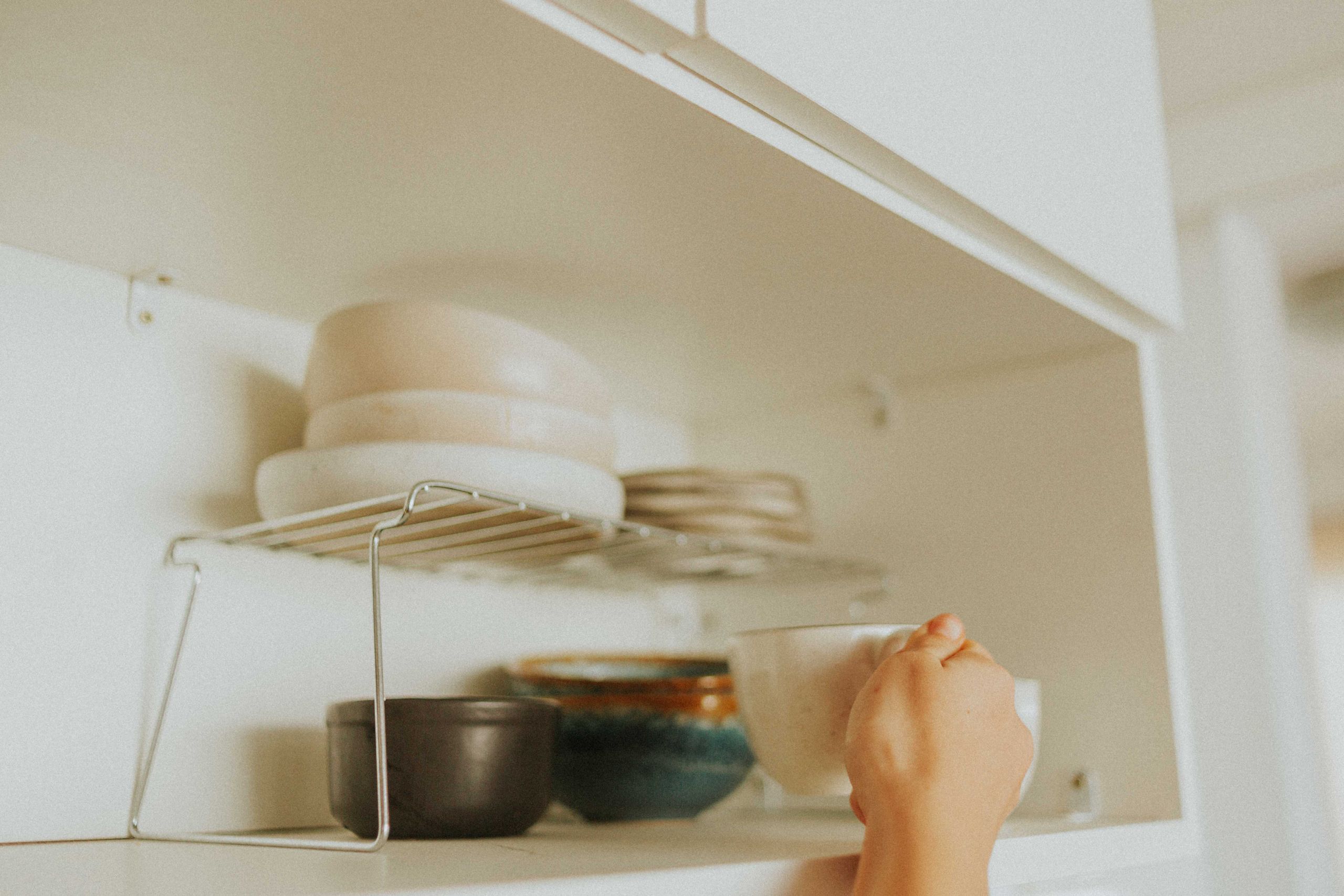
Tiered shelf risers double the usable space in a cupboard by creating a second level for plates, bowls or jars. A riser lets you stack cups under plates or tins under jars without burying the lower items. Use risers in wall cupboards where height is often wasted.
Choose risers that are sturdy enough for the items you will put on them, and test that cupboard doors still close with the riser in place. Risers are a cheap fix that often makes a new cupboard feel unnecessary.
Quick Tip: Put the heaviest items on the cupboard shelf itself and lighter items on the riser above.

3. Labelled Jars
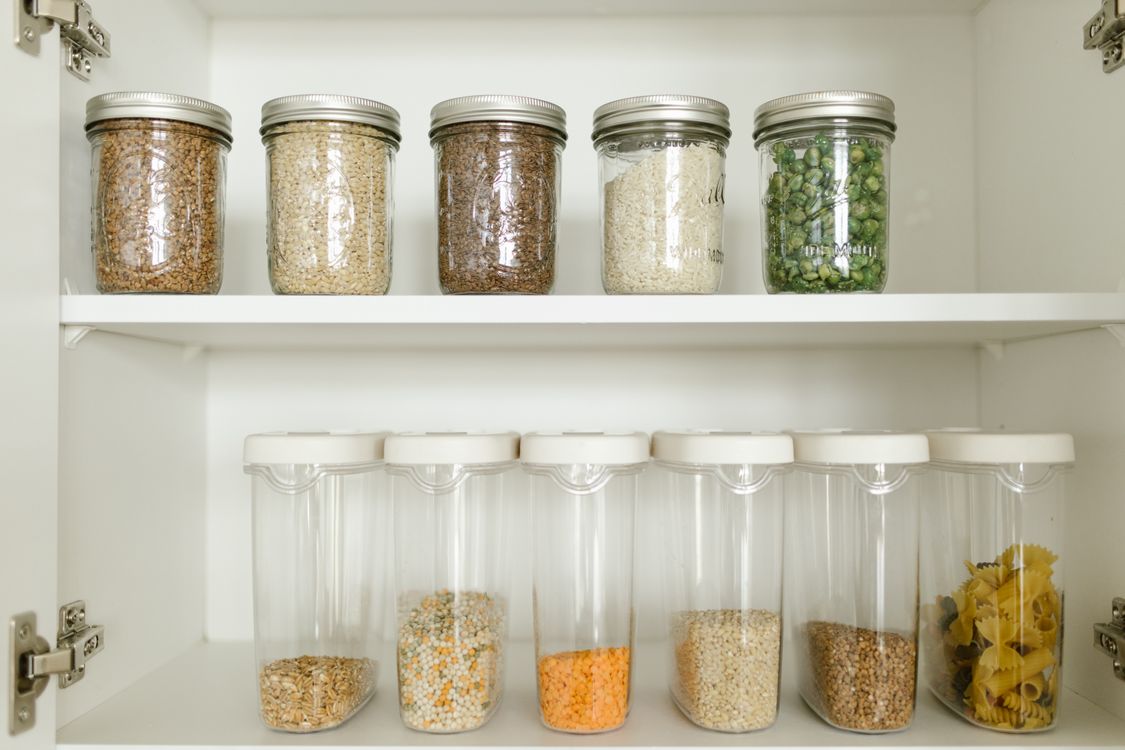
Labelled jars make a pantry readable at a glance. Decant flour, rice, pasta and pulses into clear jars with simple labels showing the contents and, ideally, the use-by date. Clear jars also help you see when you are running low, which reduces food waste and duplicate shopping.
Keep the original packaging information for allergens, either by photographing it or by storing the label inside the jar lid. Wash jars thoroughly before refilling with a different food.
Quick Tip: Label jars with the date you opened or decanted the food, not just the name.
4. Door Racks
Door racks use the inside of cupboard and pantry doors, which is often wasted space. A rack on a pantry door can hold spices, wraps, foil and small packets, while a rack inside a cupboard door can hold lids or chopping boards. Over-door racks are useful in rental kitchens where you cannot drill.
Check that the door can close fully with the rack loaded, and do not overload a door rack with heavy jars. Light, flat items work best on doors.
Quick Tip: Put the items you use most often at eye level on door racks, and rarely used items at the bottom.
5. Drawer Dividers
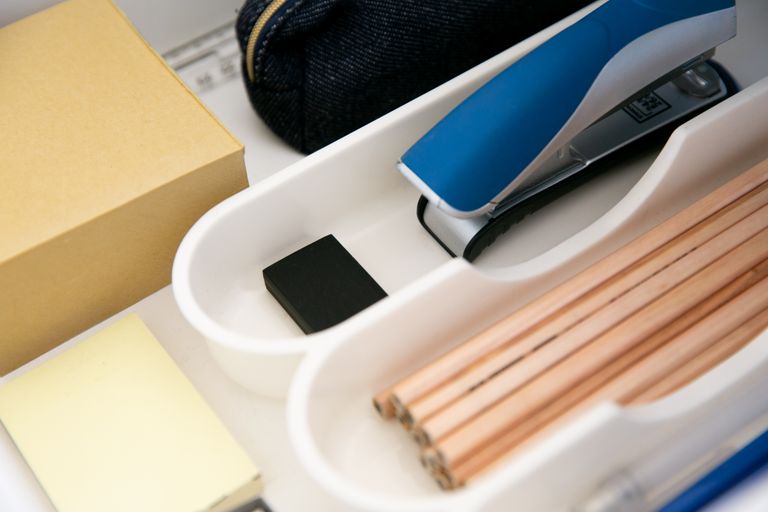
Drawer dividers stop cutlery, utensils and gadgets from tangling together. Adjustable dividers let you create sections sized to your actual tools, so spoons, spatulas and peelers each have a home. A divided drawer is faster to open and close because you can see everything without digging.
Empty the drawer completely before fitting dividers, and get rid of duplicates and broken tools at the same time. Dividers work best when each section holds only one type of item.
Quick Tip: Line the drawer with a non-slip mat under the dividers so they do not slide when you open the drawer.
6. Lazy Susan
A lazy Susan makes corner cupboards and deep shelves usable. A rotating tray for oils, vinegars, spices or cleaning bottles means you can spin the tray instead of reaching to the back of the cupboard. Lazy Susans are especially helpful in corner base units where items otherwise disappear.
Group items by use on the lazy Susan, such as baking ingredients together or oils and vinegars together. Do not overload it, or the tray will not spin smoothly.
Quick Tip: Choose a lazy Susan with a raised rim so bottles do not slide off when you spin it.

7. Tray Corrals
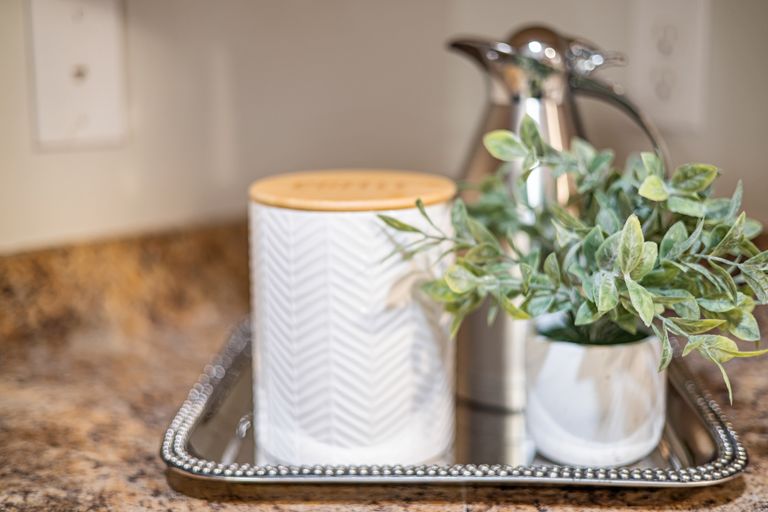
Tray corrals keep counters tidy by giving small items a boundary. Put oils, salt and pepper on one tray, coffee supplies on another, and cleaning products on a third near the sink. A tray makes a group of items look like one object rather than scattered clutter, and you can lift the whole tray to clean underneath.
Use trays that match your kitchen style, such as wood, ceramic or metal, and keep each tray to items used daily. Anything that does not fit in the tray should be stored in a cupboard.
Quick Tip: Wipe trays weekly, as oil and coffee grounds collect in tray corners.
8. Zones by Task
Zones by task mean storing items where you use them. Keep chopping boards and knives near the prep area, pans near the hob, and mugs near the kettle or coffee station. When everything for a task is in one zone, cooking involves fewer trips around the kitchen.
Draw a simple map of your kitchen zones on paper first, then move items accordingly over a weekend. Zones are easier to maintain than a system based on item type alone.
Quick Tip: Store items at the height where you use them, heavy pans low and daily mugs at eye level.
9. Pantry Baskets
Pantry baskets group loose packets and small items so shelves look orderly. Use baskets for snacks, baking supplies, packets of seasoning or lunchbox items, and label each basket on the front. The Cube Storage Organizer 16-pack can be used as individual bins in a pantry or cupboard to create these groups.
Choose baskets that pull out easily and are not so deep that items get buried at the back. Clear or open-front baskets make it easier to see what is inside.
Quick Tip: Keep one basket empty as a temporary home for items that do not yet have a category.
10. Expiry Editing
Expiry editing is the pantry habit that prevents waste. Every month, check dates on jars, packets and tins, and move items that need using soon to the front of the shelf. Write dates on decanted jars and use a first-in, first-out system when you restock.
Keep a small box for items to use up this week, and plan meals around it. Expiry editing takes ten minutes and saves money by stopping forgotten food from expiring.
Quick Tip: Check expiry dates when you put shopping away, not just during a monthly edit.
11. Counter-Free Rules
Counter-free rules keep worktops clear for cooking. Decide that only a few items, such as a kettle, a tray corral and perhaps a fruit bowl, live on the counter permanently. Everything else, including small appliances used weekly, goes in a cupboard.
Clearing counters makes cleaning faster and gives you space to prep food. If an appliance is used daily, it can stay out, but it should still sit on a tray or in a defined spot.
Quick Tip: Do a two-minute counter reset after dinner, putting everything back in its zone before you leave the kitchen.
12. Vertical Storage
Vertical storage uses wall and cupboard height that is often ignored. Add hooks inside cupboard doors for mugs, a rail on the wall for utensils, or a tall rack for chopping boards and baking trays. Vertical storage is essential in small kitchens where floor and counter space are limited.
Store flat items vertically, such as lids, boards and trays, so you can see each one without unstacking a pile. Check weight limits on rails and hooks before loading them.
Quick Tip: Use a file holder or magazine rack in a cupboard to store baking trays upright.
13. Weekly Reset Routine
A weekly reset routine keeps kitchen organization from slipping. Pick one time each week, such as Sunday evening, to wipe counters, check the fridge and pantry for expiry, return items to their zones and empty the tray corrals. Fifteen minutes is usually enough if the system is already in place.
Use the reset to note what you are running low on and add it to a shopping list. Over time, the reset becomes automatic and the kitchen stays calm without a big clean.
Quick Tip: Set a phone reminder for your reset so it happens even in busy weeks.

Final thoughts
Kitchen organization ideas work best as a system: zones by task, labelled jars and pantry baskets in the pantry, drawer dividers and lazy Susans in cupboards, and a clear counter supported by a weekly reset. Start with the under-sink pull-out and one pantry basket zone, live with the change for a week, then add risers, door racks and tray corrals. For more kitchen inspiration, see our kitchen decor ideas pillar, our coffee bar ideas and small entryway storage ideas.
Frequently Asked Questions
How do I organize a small pantry?
Use labelled jars for dry goods, baskets for packets and snacks, and door racks for spices and wraps. Keep a monthly expiry edit so nothing gets forgotten at the back of the shelf.
What is the best way to organize under the sink?
Use a pull-out organiser with two tiers, store only cleaning products there, and measure around the pipes before buying. Keep heavy bottles on the lower tier.
How can I keep kitchen counters clear?
Adopt counter-free rules, use tray corrals for daily items, and store small appliances in cupboards. A two-minute reset after dinner helps maintain clear counters.
Are labelled jars worth it?
Yes, if you decant regularly used dry goods. Labelled clear jars make contents and quantities visible, reduce waste and make shopping lists more accurate.
How often should I reset my kitchen?
A fifteen-minute weekly reset is enough for most households. Use it to check expiry dates, return items to zones and note what needs restocking.
3 Comments