10 Drawer Organization Ideas for Every Room
Drawer organization ideas are some of the easiest wins in any home, because a single tidy drawer can save you minutes every single day. Instead of digging through a jumble of utensils, cables or cosmetics, you open one drawer and everything you need is exactly where you expect it to be.
The good news is that you do not need to buy a whole new set of organizers to get started. Most of these drawer organization ideas use dividers, small boxes and a few simple habits you already have, applied room by room so the system actually sticks.
Below are ten drawer organization ideas for the kitchen, bathroom, bedroom, desk and beyond. For a bigger storage reset, start with our 13 kitchen & pantry organization ideas, then pair these drawers with 12 small laundry room ideas and 13 coat closet & mudroom organization ideas for a whole-home system.
1. Dividers by Category
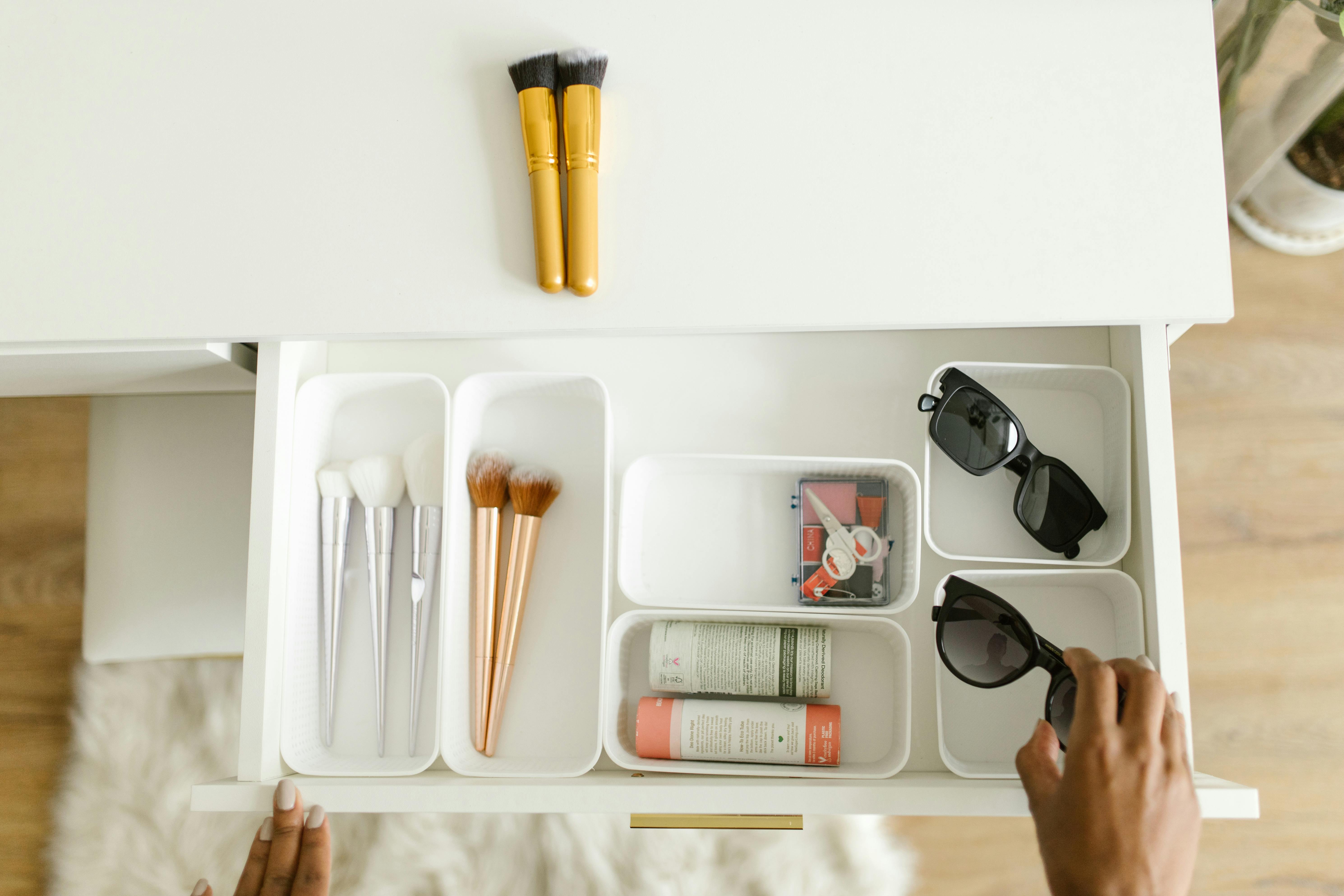
Start every drawer by dividing it by category rather than by size. Kitchen tools, bathroom toiletries, desk supplies and clothing each work best when similar items live together and nothing has to be moved to reach something else. Adjustable dividers are flexible, while fixed trays give a neater, more permanent grid.
Quick Tip: Empty the drawer completely first and group items on the counter — you will spot duplicates and dead items before you buy a single divider.
2. Junk Drawer Zones
A junk drawer does not have to be junk. Give it zones: one for tools, one for batteries and cables, one for tape and scissors, and one for the odd bits you genuinely use. Small boxes or even sturdy cardboard inserts stop everything sliding into one messy pile every time the drawer opens.
Quick Tip: Label the zones with small tags so anyone in the house can put things back in the right spot without asking.
3. Kitchen Utensil Trays
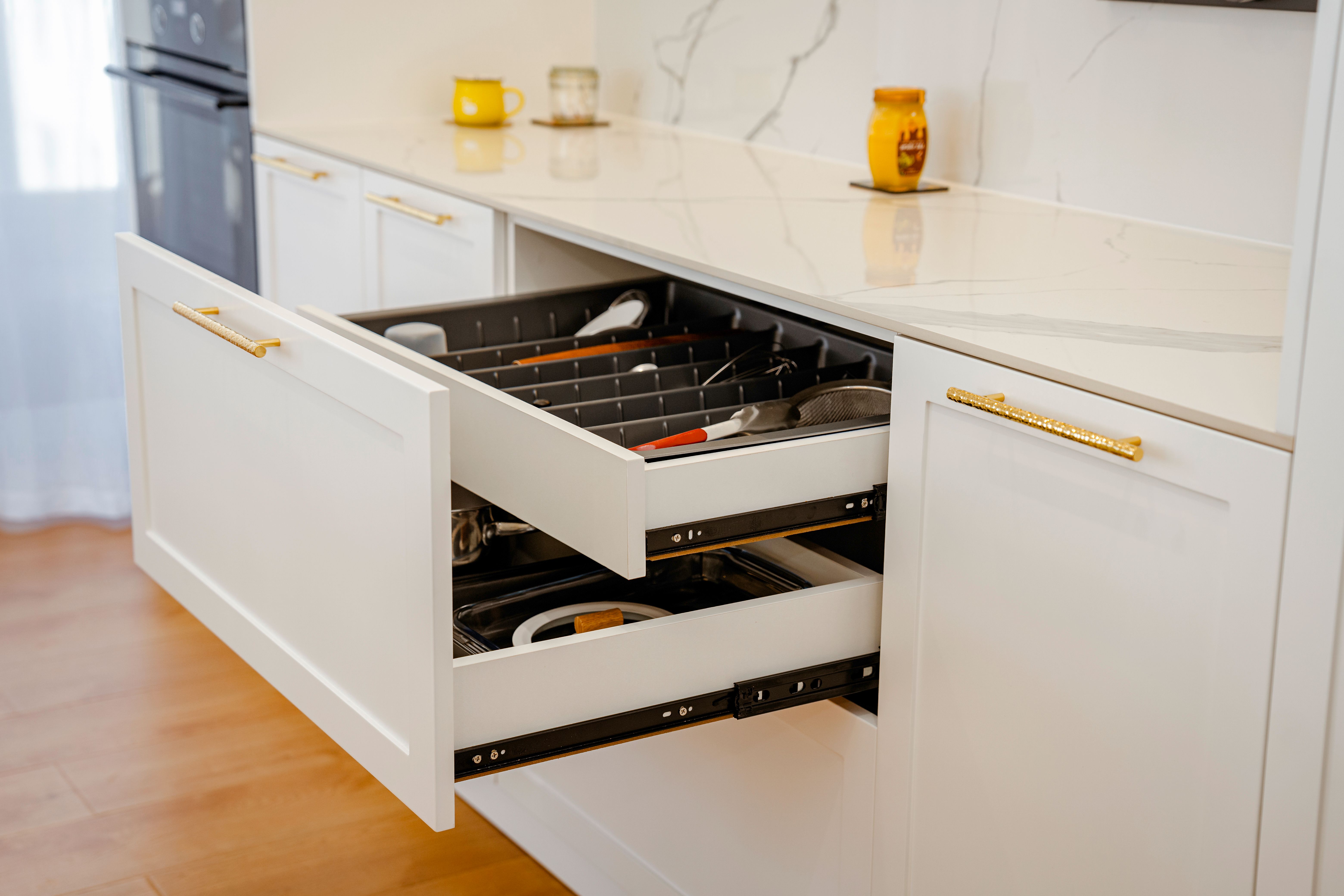
Kitchen utensil trays turn the most-opened drawer in the house into a calm, one-glance space. Lay out spatulas, whisks, peelers and measuring spoons in their own compartments, with the items you use daily at the front. A tray that fits the drawer width exactly will not slide around when you pull it open.
Quick Tip: Measure the drawer interior, not the outside, and leave a millimetre or two of clearance so the tray does not catch on the runners.
4. Bathroom Drawer Tiers
Bathroom drawers benefit from tiers because so many items are small: cotton pads, hair ties, razors, travel bottles and make-up. A shallow tray on top for daily items, with a second layer underneath for back-stock, keeps the counter clear and the drawer usable. Keep anything that could leak in a waterproof box at the back.
Quick Tip: Store the items you use standing up at the sink in the top tier, and replenish them from the lower tier once a month.
5. Desk Drawer Grid
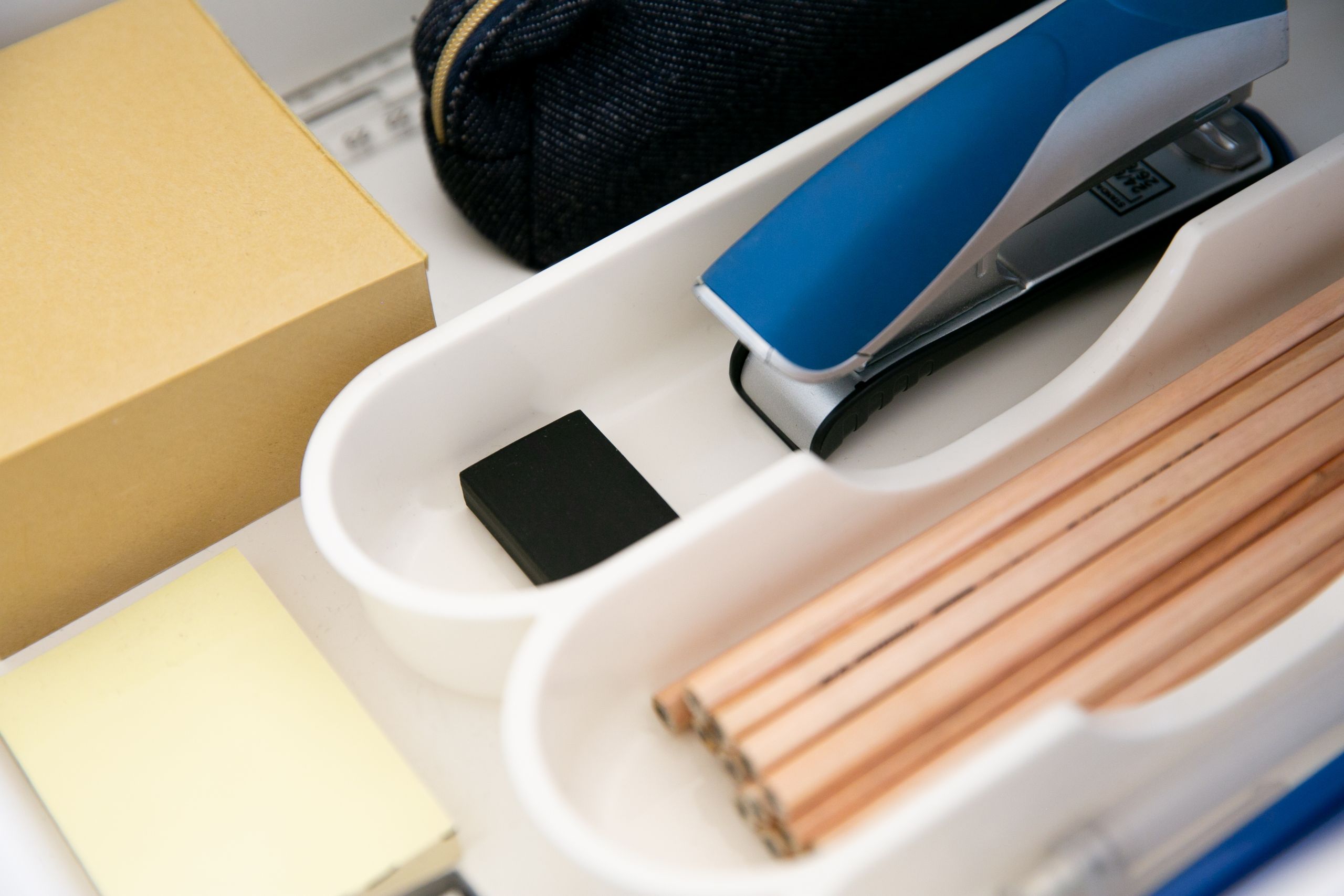
A desk drawer grid keeps pens, chargers, sticky notes and paperclips from becoming a tangle. Use a grid of small compartments for the tiny things and one longer section for notebooks or a calculator. If you work from home, keeping the grid identical to how you set it up on day one makes it far more likely to stay tidy.
Quick Tip: Keep one compartment deliberately empty as a landing zone for new items, then sort them into their proper homes at the end of the week.
6. Sock and Underwear Folds
File-folding socks and underwear so they stand upright in a drawer lets you see everything at once and pull out one pair without disturbing the rest. Rolling works for travel, but upright folds are better for daily drawers because they use the full height of the drawer and make matching pairs obvious.
Quick Tip: Fold pairs together loosely rather than balling socks, so elastic lasts longer and pairs stay together in the wash.
7. Deep Drawer Bins
Deep drawers are perfect for bins because bins use the height that flat trays waste. Use bins for pots and pans lids in the kitchen, folded jumpers in a bedroom, or cleaning cloths in a utility drawer. Bins also protect drawer bases from scratches and make it easy to lift a whole category out when you need to clean.
Quick Tip: Choose bins with handles or cut-out grips so you can lift them out with one hand when the drawer is full.
8. Label the Sections
Labels are the difference between a drawer that stays organized and one that drifts back to chaos within a month. Label each section with a short, clear word — Spatulas, Hair Ties, Chargers — and place the label where it can be read with the drawer open. Everyone who uses the drawer then knows where things belong.
Quick Tip: Use the same label style and font throughout the house so the system feels intentional rather than improvised.
9. The One-Drawer Rule
The one-drawer rule is simple: one category per drawer, and if a drawer is full, something has to leave before anything new comes in. It stops the slow creep where a cutlery drawer becomes a cutlery-and-everything-else drawer. When a drawer is genuinely full, move the overflow to a box elsewhere rather than squeezing it in.
Quick Tip: Photograph each organized drawer and tape the photo inside the drawer front as a reminder of how it should look.
10. Monthly 5-Minute Reset
A monthly five-minute reset keeps drawers from sliding back into mess. Set a timer, open one drawer, remove anything that does not belong, wipe the base, and return each item to its zone. Five minutes is short enough to do without dread, and doing it monthly means mess never gets a chance to build up.
Quick Tip: Do the reset on the same day each month — for example, the first Sunday — so it becomes a habit rather than a decision.
11. What Not to Store in Drawers
Some things are simply better stored elsewhere. Heavy items that strain drawer runners, sharp tools without covers, liquids that could leak, and important documents that need filing all cause problems in drawers. If an item damages the drawer, damages itself, or is hard to find again, it probably belongs in a cupboard, a file or a labelled box instead.
Quick Tip: When you empty a drawer for organizing, put a temporary “not for drawers” pile on the counter and deal with it straight away so it does not wander back in.

Final thoughts
Drawer organization ideas work best when they are simple, labelled and maintained with a tiny monthly reset. Start with the drawer you open most often, give it clear zones, and let that success motivate the next one. Our kitchen and pantry organization pillar guide is a natural next step once your drawers are calm.
Frequently Asked Questions
How do I organize a junk drawer?
Empty it, group what is left into a few zones such as tools, batteries and stationery, and use small boxes to keep each zone separate. Label the zones so everyone can put things back correctly.
What dividers work best for kitchen drawers?
A fixed tray that matches your drawer width works best for cutlery and utensils, while adjustable dividers suit odd-shaped tools. Measure the inside of the drawer before buying.
How often should I reorganize drawers?
A five-minute reset once a month is usually enough. A full reorganization is only needed when your household or routine changes significantly.
How do I stop drawers becoming messy again?
Give every item a labelled home, follow the one-drawer rule, and keep one empty landing zone in each drawer for new items until your weekly sort.
Can I organize drawers without buying organizers?
Yes. Sturdy cardboard boxes, small jars and folded card can all act as dividers. Buy organizers only for the drawers you use most, once you know the zones work.