12 Studio Apartment Divider Ideas
This post contains Amazon affiliate links. If you buy through them, Top Finds Review may earn a small commission at no extra cost to you.
Good studio apartment divider ideas do not build walls. They borrow a line from a shelf, a curtain or a change of rug and tell your brain where one job ends and another begins. In a studio that means sleep, work, cooking and relaxing can share one room without every zone shouting over the others.
These ideas also work in a one-bedroom flat where the living room has to double as a dining room. For more scale and storage basics, see our small apartment living room ideas, and for a calmer sleep corner, compare the cozy bedroom ideas for a calm retreat pillar. If you prefer a restrained palette, the quiet luxury living room ideas on a budget are a useful companion.
Shop This Look
- Cube Storage Organizer 16-pack — Check Price on Amazon
- No-Drill Room Divider Curtain Rod — Check Price on Amazon
- Rattan Console Table with Outlets — Check Price on Amazon
1. Cube Shelf Divider
A cube shelf divider is the studio classic because it stores on both sides. Arrange the Cube Storage Organizer 16-pack as a low run between sofa and bed, with baskets facing the sleep side and books or plants facing the living side. Keep the top open and the height below shoulder level so the room still feels connected.
Stability matters. Keep it low and wide, or fix it to the wall if your lease allows. Put heavier items in the bottom cubes and leave a gap cube somewhere in the middle so the divider does not read as a solid block.
Quick Tip: Style both sides before you move it into place — it is much harder once it is full.
2. Curtain Tension Rod
A curtain on a tension rod is the fastest divider to install and the easiest to remove when you move out. The No-Drill Room Divider Curtain Rod lets you hang a sheer or blackout panel between the bed and the living area without drilling. Sheer fabric keeps light moving through; blackout fabric gives the sleep zone real privacy at night.
Measure the span carefully and choose a rod rated for the curtain weight. Hang the curtain so it just clears the floor, and add a second panel if you want the divider to close fully rather than float in the middle.
Quick Tip: Wash and iron the curtain before hanging so the folds fall evenly from day one.
3. Open Bookcase Divider
An open bookcase works like a cube shelf but with a taller, more library-like presence. Place it perpendicular to the wall so it defines a reading nook or a desk corner, and style it with books, a small lamp and one plant. Because both sides are visible, treat the back as a display side too, not as a blank panel.
Leave some shelves half empty. A bookcase packed from top to bottom will feel like a wall and collect dust in a studio. A few gaps keep the divider airy and give you room to grow the collection.
Quick Tip: Turn the bookcase slightly on a diagonal in a corner to soften the line between zones.

4. Folding Screen
A folding screen is flexible in the truest sense: open it for a dinner party, fold it flat against the wall for a yoga session. Choose a screen with a light frame and fabric or cane panels so it does not dominate the room when stored. A three-panel screen is usually enough to screen a bed or a desk without eating floor space.
Position the screen at an angle rather than straight across the room. An angled screen creates a softer boundary and leaves a natural walkway around its edge. Check that it stands steadily on your floor — a wobbly screen is worse than none.
Quick Tip: Add a clip-on lamp to the top rail of a folding screen for a cosy reading glow.
5. Plant Wall Divider
A plant wall divider brings height and life to the boundary between zones. Use a narrow shelf or a set of wall planters on the living-room side of a divider, with trailing plants that spill downward. Keep the plants on the side where you will actually water them, and choose varieties that match the light on that side of the room.
Do not let the plant wall become a jungle that blocks light. Prune trailing stems to a consistent length and keep pots in matching finishes. A plant wall looks best when it is edited, not when every shelf is full.
Quick Tip: Put saucers under every pot and a waterproof mat under the whole divider to protect rental floors.
6. Rug Zoning
Rug zoning is the quietest divider of all: no furniture moves, but the floor tells you where the living area ends. Lay one rug under the sofa and coffee table, and a smaller, different rug beside the bed or desk. Keep the rugs in the same colour family so the zones relate to each other.
Leave a clear strip of bare floor between rugs as the walkway. If the rugs touch, the zones merge again. Low-pile rugs are best in a studio because they do not catch on chair legs or door bottoms.
Quick Tip: Use rug pads under both rugs so edges do not curl and create a trip hazard.
7. Lighting Zoning
Lighting zoning divides a studio by mood rather than by objects. A warm floor lamp by the sofa, a task light at the desk and a soft bedside light each claim their own territory after dark. Keep the ceiling light off in the evening and let the zones glow separately.
Use the same bulb temperature across all lamps so the zones feel like one home, not three different rooms. Plug-in pendant lights or rechargeable lamps are renter-friendly ways to add a new light point without wiring.
Quick Tip: Put each zone’s lamp on a separate smart plug so you can switch the whole studio to evening mode at once.

8. Sofa-Back Console
A console behind the sofa draws an invisible line between the seating area and whatever happens behind it — a desk, a dining table or the bed. The Rattan Console Table with Outlets adds a surface for a lamp and a phone charger, and its outlets remove the need for a trailing extension lead across the room.
Match the console depth to the sofa back so the line looks clean from the side. Keep the console top to a lamp, a tray and one decorative object; a crowded console becomes a clutter shelf that everyone can see from behind the sofa.
Quick Tip: Measure the console height against the sofa back — it should sit just below or level with it, not tower above it.
9. Glass-Partition Look
You can borrow the glass-partition look without building anything. A slim black or timber frame with frosted or fluted panels, freestanding or hung from a ceiling track, filters light while still marking a boundary. It suits a desk corner or a wardrobe area where you want privacy without darkness.
Keep the frame slim and the panels simple. A busy pattern will date quickly and can make a small studio feel heavier. If you rent, look for freestanding frames or ceiling-hung systems that leave no marks.
Quick Tip: Frosted panels hide the sleep zone from the sofa while still letting daylight reach the back of the room.
10. Wardrobe Divider
A wardrobe placed with its back to the living area is a divider that also solves storage. Turn a tall wardrobe so its back faces the sofa, and add a slim shelf or art on that back panel so it does not look like a blank cupboard from the living side. This works especially well to screen a bed from the front door.
Check door swing and drawer clearance before you commit to the position — a wardrobe that cannot fully open is a daily frustration. Leave at least a few inches behind the wardrobe for air circulation if it sits against a wall.
Quick Tip: Add adhesive hooks or a slim rail to the wardrobe’s living-room side for bags and throws.
11. Desk Divider
A desk divider protects focus. Place the desk with its back to the living area, or screen it with a low shelf, so that when you sit down to work you are not facing the sofa and the television. A small desk lamp and a pinboard on the wall above the desk complete the zone.
Keep work supplies in one drawer or basket so the desk can be cleared at the end of the day. In a studio, the ability to hide work is as important as the ability to do it. A chair that tucks fully under the desk keeps the walkway clear.
Quick Tip: Use a cable box under the desk so charging leads do not snake across the divider line.

12. Ceiling-Hung Panels
Ceiling-hung panels — fabric, bamboo or acoustic felt — divide a studio from above, leaving the floor completely free. Hung from a track or a tension system, they can slide open in the daytime and close for sleep or work. This is a strong option when floor space is too tight for a shelf or screen.
Choose panels that are light enough for the fixing system and long enough to reach just above the floor. Acoustic panels have the bonus of softening sound between zones, which helps in a single room where the television and the bed are only a few steps apart.
Quick Tip: Test the panels fully open and fully closed before fixing the track position — the overlap matters.
Final thoughts
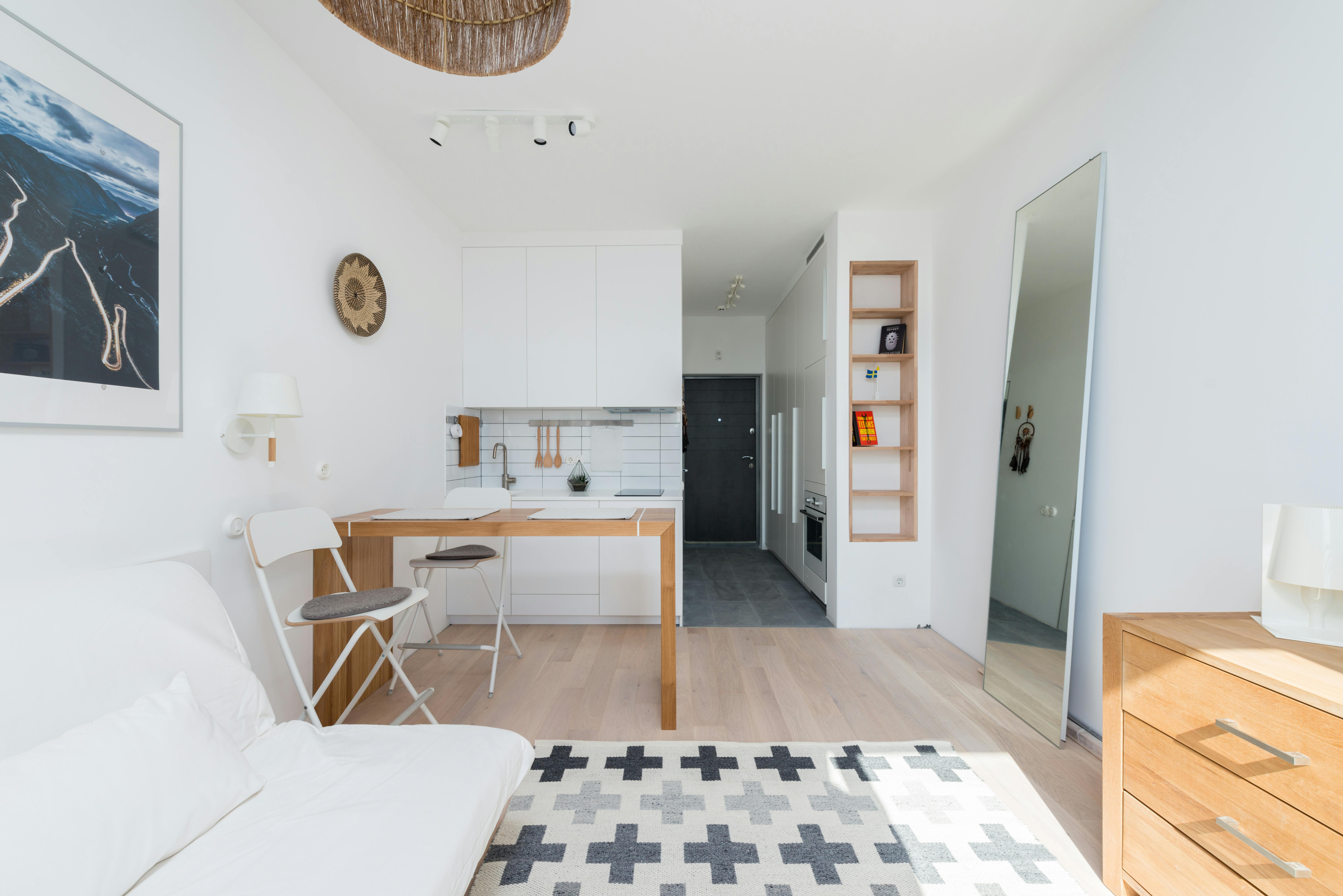
Studio apartment divider ideas work best in pairs: a physical divider such as a cube shelf or curtain, plus a soft divider such as rug zoning or lighting zoning. Start with the divider you can remove most easily, live with it for a week, and add a second layer only if the zone still feels undefined. For the living-room side of the plan, revisit our 15 small apartment living room ideas so the sofa area and the sleep area are designed together.
Frequently Asked Questions
What is the best divider for a studio apartment?
It depends on whether you need storage, privacy or flexibility. A cube shelf divider gives storage on both sides, a curtain gives instant privacy, and a folding screen gives the most flexibility. Many studios use two together.
Can I divide a studio without drilling?
Yes. Tension-rod curtains, freestanding cube shelves, folding screens, rug zoning and sofa-back consoles all work without fixings. Always check your lease before drilling or mounting anything to the wall or ceiling.
How do I keep a divider from making the room feel smaller?
Keep dividers low or open, use light materials, and leave gaps so light passes through. A divider that stops below shoulder height or has open cubes will zone the room without closing it off.
Should a divider match the sofa or the bed?
Match the divider to the larger furniture piece it sits beside, usually the sofa, and repeat that finish in the sleep or work zone in a smaller dose. Consistency is what makes separate zones feel like one home.
How far should a divider sit from the bed or sofa?
Leave enough room to walk around it comfortably and to open any doors or drawers it contains. As a rule, keep at least a forearm’s length of clear space on the working side of a shelf or wardrobe divider.